Little Senior Care Residences: A Gentler Method to Alzheimer's and Memory Care
Business Name: BeeHive Homes of Farmington
Address: 400 N Locke Ave, Farmington, NM 87401
Phone: (505) 591-7900
BeeHive Homes of Farmington
Beehive Homes of Farmington assisted living care is ideal for those who value their independence but require help with some of the activities of daily living. Residents enjoy 24-hour support, private bedrooms with baths, medication monitoring, home-cooked meals, housekeeping and laundry services, social activities and outings, and daily physical and mental exercise opportunities. Beehive Homes memory care services accommodates the growing number of seniors affected by memory loss and dementia. Beehive Homes offers respite (short-term) care for your loved one should the need arise. Whether help is needed after a surgery or illness, for vacation coverage, or just a break from the routine, respite care provides you peace of mind for any length of stay.
400 N Locke Ave, Farmington, NM 87401
Business Hours
Families generally start looking for Alzheimer's and dementia care after a crisis. A roaming incident. A late night fall. A range left on. The search frequently results in glossy brochures for large assisted living neighborhoods with chandeliers, movie theaters, and activity calendars that appear like cruise itineraries.
Then somebody mentions a little residential care home that takes 8 homeowners, tucked into a quiet neighborhood, where the owner still purchases the groceries and understands every household by name. It may not look incredible from the street. Inside, though, the rhythm of life can feel calmer and more human, especially for someone living with memory loss.
This is the world of little senior care homes. They are not the best fit for every person with dementia, however for many, they use a gentler, more relational method to memory care than big facilities are often able to sustain.
What small senior care homes actually are
Small senior care homes go by various names depending upon the state: residential care homes, board and care, group homes, adult family homes. The common thread is scale. Rather of serving lots or numerous residents, these homes generally support between 4 and sixteen older adults, often in a home that looks just like others on the block.
Regulations vary widely, however in most states these homes are licensed as a type of assisted living or residential care, not as knowledgeable nursing centers. They normally supply aid with day-to-day jobs such as bathing, dressing, toileting, meals, and medications. Some are specifically certified or designated for dementia care or memory care, which usually means staff have additional training and the environment is protected to prevent unsafe wandering.
Families often presume that a house-based setting is "less medical" and for that reason less capable. That is not necessarily real. I have seen little homes handle complex mixes of diabetes, Parkinson's, and moderate dementia with ability and consistency, largely because the very same personnel see the very same eight citizens, day after day. The oversight design is various from a nursing home, however for many individuals with Alzheimer's disease who do not have acute nursing needs, it can be more than adequate.
Why scale matters for individuals with dementia
Dementia changes how a person takes in the world. Noise, visual clutter, and unknown regimens create tension. Even a simple job like walking from bedroom to dining-room can end up being disorienting in a long hallway with similar doors, echoing floors, and people rushing by.
In a little senior care home, the environment is physically and socially smaller sized. Citizens normally share typical areas such as a living room, dining-room, kitchen area, and lawn. Corridors are short. Doors cause familiar spaces, not to wings and elevators. Daily life feels more like a home than a campus.
For somebody with amnesia, that smaller sized phase can suggest:
- Less anxiety, since there are fewer people, fewer loud statements, and fewer abrupt transitions.
- More repeating, which supports memory. The same chair at the exact same table. The exact same caretaker can be found in the early morning. The same corridor to the bathroom.
- Easier wayfinding. Landmarks are identifiable, and the range between areas is manageable.
- Fewer missed cues. A resident who looks drowsy or off-balance is more noticeable in a living-room with 6 people than in a dining-room with sixty.
A daughter as soon as told me that her father, a retired carpenter with moderate Alzheimer's, was "lost in the shuffle" at a large memory care facility. Personnel were kind, however the layout was complicated, and he would roam into other homeowners' rooms looking for the workshop he remembered from years earlier. After transferring to a small home with only ten locals, he stopped attempting to "discover the shop" and instead began to help the caretaker with minor home tasks such as tightening loose screws on chairs. The smaller setting did not cure his dementia, naturally, but it provided his staying strengths a place to surface.
How life feels in a little memory care home
Families often ignore how much the feel of the day-to-day routine matters in dementia care. Medication management, fall prevention, and nutrition are important, however the texture of the day is what shapes state of mind and behavior.
In many little homes, meals are prepared in a noticeable cooking area, not in a commercial back space. Residents can smell coffee developing or onions sautéing. That sensory experience helps set off hunger and maintain a sense of time: morning, lunchtime, evening. I have actually enjoyed homeowners who consumed inadequately in institutional settings suddenly end up complete plates in a small home just because they had time to breathe in the scent of food cooking and to view it show up on the table.
Staff ratios are usually tighter since there are less citizens spread over less square feet. It is not unusual to see one caretaker for 5 or six locals throughout the day in a premium little home, compared with ratios that can be twice that in some bigger assisted living or memory care units. Higher ratios do not instantly ensure much better care, however they do make constant, prompt support more possible.
Activities tend to be basic and flexible: folding laundry together at the table, watering plants on the patio area, listening to old tunes, or doing chair workouts throughout an early morning stretch. In a home with ten homeowners, it is simpler to match activities to real interests. A previous teacher may "assist check out" to others; a long-lasting garden enthusiast may prefer to deadhead flowers rather than participate in a generic bingo game.
The small scale likewise supports more responsive habits management. A resident who becomes upset in the late afternoon can be strolled into a quiet bed room or yard within seconds, without navigating long hallways or awaiting a readily available employee to respond from another wing.
Comparing small homes to large assisted living and memory care communities
Both small homes and large neighborhoods exist along a quality spectrum. I have actually seen beautifully run big memory care communities and inadequately managed little homes, and vice versa. Still, there are inherent trade-offs households need to understand.

Here is an easy method to compare them:
- Small senior care homes frequently excel in personalized attention, connection of caretakers, and a calm environment. They can feel more like an extended household than a facility.
- Large assisted living and memory care communities can offer more amenities, such as on-site physical therapy, beauty parlor services, transport, and a broader menu of structured activities.
- Small homes might be quicker to notice subtle changes in habits or health, because personnel know each resident's standard intimately.
- Large settings typically have more noticeable management existence on-site, numerous layers of supervision, and easier access to certified nurses during organization hours.
- Small homes have actually restricted capacity, so if a resident's requirements intensify unexpectedly, there may be less flexibility. Bigger settings might have transitional units or more staff to absorb increased care demands.
Cost can be surprisingly similar. A private room in a high-end large memory care facility may cost more than a shared space in a small home, but numerous midrange little homes rate in the very same ballpark as midrange assisted living neighborhoods in the same market. Local real estate expenses, staffing earnings, and level of care all influence the last figure.
The medical side: dementia care in a small setting
For families, the huge question is usually not looks. It is whether a small home can genuinely handle the medical complexity of dementia care over time.
Medication management is main. In credible little homes, caregivers are trained to administer medications, track refills, and monitor for negative effects. Some homes use electronic medication administration records; others utilize efficient paper systems that are checked routinely by a nurse or pharmacist. The smaller census makes it easier to observe if Mrs. L avoids her night tablets or if Mr. J appears more drowsy after a dose change.
Chronic conditions such as cardiovascular disease, COPD, diabetes, and arthritis are common along with dementia. A strong little home will have clear protocols for keeping track of weights, blood sugars, or oxygen usage, and will collaborate with outdoors home health or hospice services as required. In lots of states, visiting nurses and therapists can see homeowners on-site in these homes, which helps avoid disruptive journeys to clinics.
Behavioral signs of dementia are often where the difference in setting ends up being most obvious. When somebody starts to pace, call out, or withstand care, a caretaker in a small home can adjust the environment nearly instantly: alter the lighting, close a noisy television, shift to a quieter space, or step outdoors for fresh air. These nonpharmacologic strategies are the structure of good dementia care, and they depend heavily on personnel understanding everyone's history, choices, and triggers.
Medication for agitation or psychosis has its place, especially when security is at stake, however a lot of clinicians attempt to keep doses as low as possible. Staff who see the very same eight citizens every day are typically much better positioned to discover patterns such as "he gets agitated when his bro leaves" or "she yells more when the news is on" and to change routines accordingly.
There are limitations. Some little homes, specifically those with very little nursing oversight, might deal with locals who have regular medical crises, complex injury care, or intense behavioral symptoms such as aggressive striking or duplicated unsafe roaming. An excellent operator will be truthful about those limits and will not handle citizens they can not support.
The psychological experience for families
Families often describe little senior care homes as "less frustrating." The parking lot is smaller. The front door might have a wreath or a welcome mat rather of a reception desk. You can typically walk directly into the kitchen and odor what is cooking.
That said, the intimacy of a little setting cuts both ways. There is less privacy. If you are unhappy with something, your feedback goes directly to the exact same handful of personnel caring for your parent every day. In a large facility, problems might path through a formal complaint procedure or a distant corporate workplace. In a little home, they tend to be face to face.
What households typically value most is connection. The caregiver who bathes your mother in March is most likely the same one who will be holding her hand during a breathing infection in November. That continuity develops trust with time. It likewise lowers the chance of duplicated "being familiar with you" cycles that can be so hard on an individual with memory loss.
However, small homes are more susceptible to staff disruptions. If 2 long-time caregivers stopped, the culture of your house can move rapidly. Households ought to focus not only to the owner or supervisor, but also to the front-line staff who run the daily routine.
When a little senior care home is a great fit
Small homes can be an excellent choice for specific circumstances. Families who tend to be happiest with this model frequently share a few of these conditions:
- The person with dementia is overwhelmed by crowds, sound, or complex environments and does much better with fewer individuals around.
- The family values relationship-based care over amenities. They care more about consistent caretakers and versatile routines than about on-site gyms or a jam-packed activity calendar.
- The person does not have continuous, high-intensity nursing needs, such as ventilator support or sophisticated injury care that truly need a skilled nursing facility.
- The household wants to be carefully involved, checking out frequently and collaborating with personnel on preferences, history, and approaches.
- Cultural or language positioning is important, and they discover a home where personnel share a familiar background, food traditions, or main language.
In these scenarios, the home-like environment supports staying capabilities while buffering a few of the confusion dementia brings.
When a small home might not be the ideal choice
There are likewise clear circumstances where a bigger assisted living, specialized memory care unit, or nursing home might be safer or more practical.
If the person has extremely unstable medical conditions, requires frequent on-site physician assessment, or needs specific equipment kept track of around the clock, a setting with on-site nursing and closer medical oversight might be nonnegotiable.
Some people with dementia keep high physical energy and require substantial area for safe roaming, multiple activity stations, and structured programming to decrease agitation. A really small home with restricted indoor and outdoor space can feel confining for them.
Finances can tip the scale, too. Some large centers take part in Medicaid waiver programs that cover memory care after personal funds are diminished. Lots of small homes, specifically those with fewer homeowners, operate practically completely on personal pay and might not accept Medicaid at all. Families who prepare for needing public financing in the foreseeable future must factor this into their preparation from the start.
Finally, location matters. In some areas, little homes are plentiful and well-regulated. In others, options are sparse or quality is inconsistent. A high-quality big neighborhood near household will often be better than a mediocre little home an hour away.
How to assess a small senior care home for dementia care
Families frequently inform me they feel less daunted walking into a home than into a huge structure with badges and ID scanners. That convenience can be favorable, but do not let it change a cautious assessment.
Here is a concentrated checklist to assist your visits:
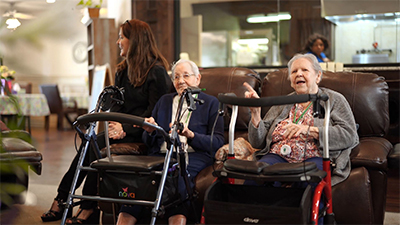
- Observe the rhythm of the day. Are homeowners engaged, clean, and calmly inhabited, or do you see individuals slumped in wheelchairs with televisions blaring?
- Ask particular concerns about dementia training and experience. How do staff deal with roaming, rejection of care, or sundowning? Listen for concrete examples, not unclear reassurance.
- Check staffing patterns around the clock. Who is on-site over night? The number of caretakers are present for the variety of locals at night and on weekends?
- Clarify what happens as needs increase. At what point would the home ask a resident to relocate to a greater level of care? How do they involve hospice or home health?
- Review interaction regimens. How typically will you receive updates? Whom do you call after hours? What occurs if there is a fall or a medication error?
Trust your senses. A modest home with a little worn furniture can still supply outstanding care, while a perfectly embellished home can hide disorganization or burnout. Take notice of how personnel speak about citizens when they think you are not listening, how quickly call bells or demands are responded to, and whether citizens attend to personnel senior living by name with convenience or fear.
The function of respite care in little homes
Respite care is frequently neglected, yet it can be a lifeline for households taking care of a loved one with dementia in your home. Lots of little homes use short-term stays of a couple of days to a couple of weeks. This offers the primary caretaker a possibility to rest, travel, or handle their own health requirements while their loved one gets professional support.
Short-term stays in a small setting have specific benefits for individuals with amnesia. The environment is simpler to learn in a few days, and the exact same caretakers interact with the individual repeatedly, which develops familiarity quickly. I have actually had households use respite in a little home several times a year, partly to rest, but likewise to gradually present their loved one to the setting in case an irreversible relocation becomes essential later.
For some, respite remains end up being a trial period. The household sees how their loved one reacts to the small home, how staff interact, and whether day-to-day regimens are truly customized. If the trial works well, transitioning to full-time residency feels less abrupt.
Integrating little homes into a broader care strategy
Choosing a little senior care home for Alzheimer's or dementia care is not a separated choice. It should fit into a wider strategy that consists of treatment, legal and financial preparation, and family expectations.
Primary care physicians and neurologists stay key partners, even after a move. The very best little homes will coordinate closely with outdoors clinicians, sending out timely notes about modifications in behavior, hunger, sleep, or falls. Households who remain active in medical visits, either in person or by means of telehealth, assistance ensure that the medical side of dementia care keeps pace with the daily living support the home provides.
Legal and monetary preparation ought to ideally happen well before a relocation. Powers of attorney for healthcare and financial resources, advance instructions, and sensible budgeting for the complete course of the disease are just as important whether your loved one lives in a little home, a large assisted living community, or with family.
Finally, families should change their own expectations. A move to a little senior care home does not end the family's function. It changes it. Instead of hands-on bathing or continuous supervision, the function shifts toward advocacy, emotional support, and partnership with expert caretakers. The smaller size of the home can make that collaboration feel more like shared stewardship than like navigating a big bureaucracy.
A gentler method, not a best one
Alzheimer's and other forms of dementia do not lend themselves to easy answers. There is no perfect setting, just better and even worse matches for a particular person at a specific time.

Small senior care homes include an important choice to the landscape of senior care, assisted living, and memory care. Their scale permits a quieter, more relational design of dementia care that lots of people find deeply humane. They can provide a sanctuary of continuity in an illness specified by loss and change.
Yet they are not a magic option. Their success depends upon the stability of the owner, the stability and training of staff, and reasonable positioning between resident needs and the home's abilities. Families who stroll in with clear eyes, ask particular concerns, and stay engaged over time are most likely to find in these homes what they most expect: safety, dignity, and familiar generosity for somebody they love.
BeeHive Homes of Farmington provides assisted living care
BeeHive Homes of Farmington provides memory care services
BeeHive Homes of Farmington provides respite care services
BeeHive Homes of Farmington supports assistance with bathing and grooming
BeeHive Homes of Farmington offers private bedrooms with private bathrooms
BeeHive Homes of Farmington provides medication monitoring and documentation
BeeHive Homes of Farmington serves dietitian-approved meals
BeeHive Homes of Farmington provides housekeeping services
BeeHive Homes of Farmington provides laundry services
BeeHive Homes of Farmington offers community dining and social engagement activities
BeeHive Homes of Farmington features life enrichment activities
BeeHive Homes of Farmington supports personal care assistance during meals and daily routines
BeeHive Homes of Farmington promotes frequent physical and mental exercise opportunities
BeeHive Homes of Farmington provides a home-like residential environment
BeeHive Homes of Farmington creates customized care plans as residents’ needs change
BeeHive Homes of Farmington assesses individual resident care needs
BeeHive Homes of Farmington accepts private pay and long-term care insurance
BeeHive Homes of Farmington assists qualified veterans with Aid and Attendance benefits
BeeHive Homes of Farmington encourages meaningful resident-to-staff relationships
BeeHive Homes of Farmington delivers compassionate, attentive senior care focused on dignity and comfort
BeeHive Homes of Farmington has a phone number of (505) 591-7900
BeeHive Homes of Farmington has an address of 400 N Locke Ave, Farmington, NM 87401
BeeHive Homes of Farmington has a website https://beehivehomes.com/locations/farmington/
BeeHive Homes of Farmington has Google Maps listing https://maps.app.goo.gl/pYJKDtNznRqDSEHc7
BeeHive Homes of Farmington has Facebook page https://www.facebook.com/BeeHiveHomesFarmington
BeeHive Homes of Farmington has an YouTube page https://www.youtube.com/@WelcomeHomeBeeHiveHomes
BeeHive Homes of Farmington won Top Assisted Living Home 2025
BeeHive Homes of Farmington earned Best Customer Service Award 2024
BeeHive Homes of Farmington placed 1st for Senior Living Communities 2025
People Also Ask about BeeHive Homes of Farmington
What is BeeHive Homes of Farmington Living monthly room rate?
The rate depends on the level of care that is needed (see Pricing Guide above). We do a pre-admission evaluation for each resident to determine the level of care needed. The monthly rate is based on this evaluation. There are no hidden costs or fees
Can residents stay in BeeHive Homes until the end of their life?
Usually yes. There are exceptions, such as when there are safety issues with the resident, or they need 24 hour skilled nursing services
Do we have a nurse on staff?
Yes. Our administrator at the Farmington BeeHive is a registered nurse and on-premise 40 hours/week. In addition, we have an on-call nurse for any after-hours needs
What are BeeHive Homes’ visiting hours?
Visiting hours are adjusted to accommodate the families and the resident’s needs… just not too early or too late
Do we have couple’s rooms available?
Yes, each home has rooms designed to accommodate couples. Please ask about the availability of these rooms
Where is BeeHive Homes of Farmington located?
BeeHive Homes of Farmington is conveniently located at 400 N Locke Ave, Farmington, NM 87401. You can easily find directions on Google Maps or call at (505) 591-7900 Monday through Sunday 9:00am to 5:00pm
How can I contact BeeHive Homes of Farmington?
You can contact BeeHive Homes of Farmington by phone at: (505) 591-7900, visit their website at https://beehivehomes.com/locations/farmington/,or connect on social media via Facebook or YouTube
Take a drive to Si Señor Restaurant . Si Senor Restaurant offers comforting regional dishes that support enjoyable assisted living, memory care, senior care, elderly care, and respite care dining visits.